






















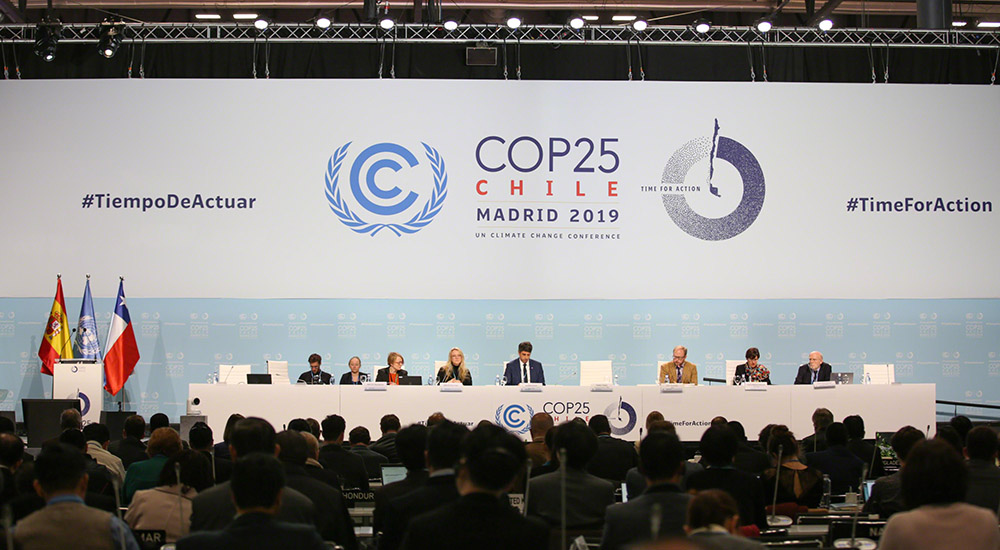
Chile/Madrid Climate Change Conference continues on Tuesday and began with detailed negotiation on a wide range of issues, from finance to transparency, gender to response measure and adaptation to markets.
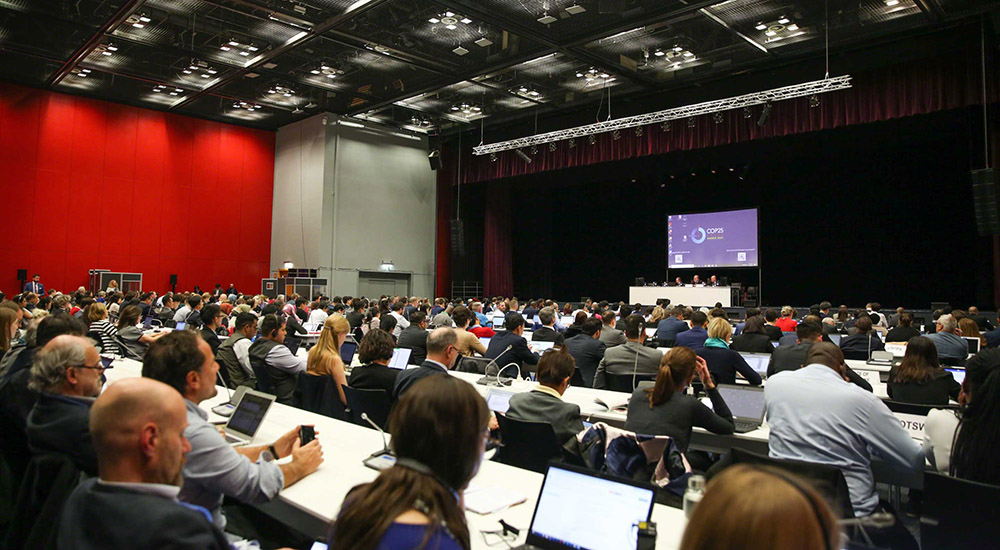
Negotiation of Article 6, from market and non-market approaches featured prominently. Heads of delegation met in the morning to discuss on expectations and process for concluding the negotiation at this session. Negotiations began by afternoon, filling the room beyond capacity. Focus was first made on non-market approaches and then slowly turned to market related factors. Potentially thorny finance issues, including, taking stock of progress towards the goal of USD 100 billion/year by 2020, and the steps towards setting a new quantified goal from 2025, were raised.
Adaptation fund board membership discussion proved to be difficult, with very little common ground found in the first negotiation session. Much works on financial issues, including, providing guidance to Green Climate Fund (GCF), and Global Environment facility (GEF) still remains.
Attentions to key cross-cutting session was brought in by the Chilean presidency. Role of traditional knowledge and need to include a range of perspectives in supporting climate action throughout the work of the UNFCC were highlighted by several speakers during the informal dialogue on the local communities and indigenous people’s platform.
Platform for the science-Based on ocean solutions was also launched by the presidency, as the special report on ocean and cryosphere in a changing climate (SROCC), highlighted the significant effects experienced by the ocean, which, without immediate action will be increasingly dangerous.
Finally, workshop on Koronivia joint work on agriculture gave advices on the ways to improve nutrient use and manure management. Stella Gama, Malawi, stressed on her words, “action is urgent”, “we need to change gears” to ensure food security for all.
Pic Source: www.iisd.org