





















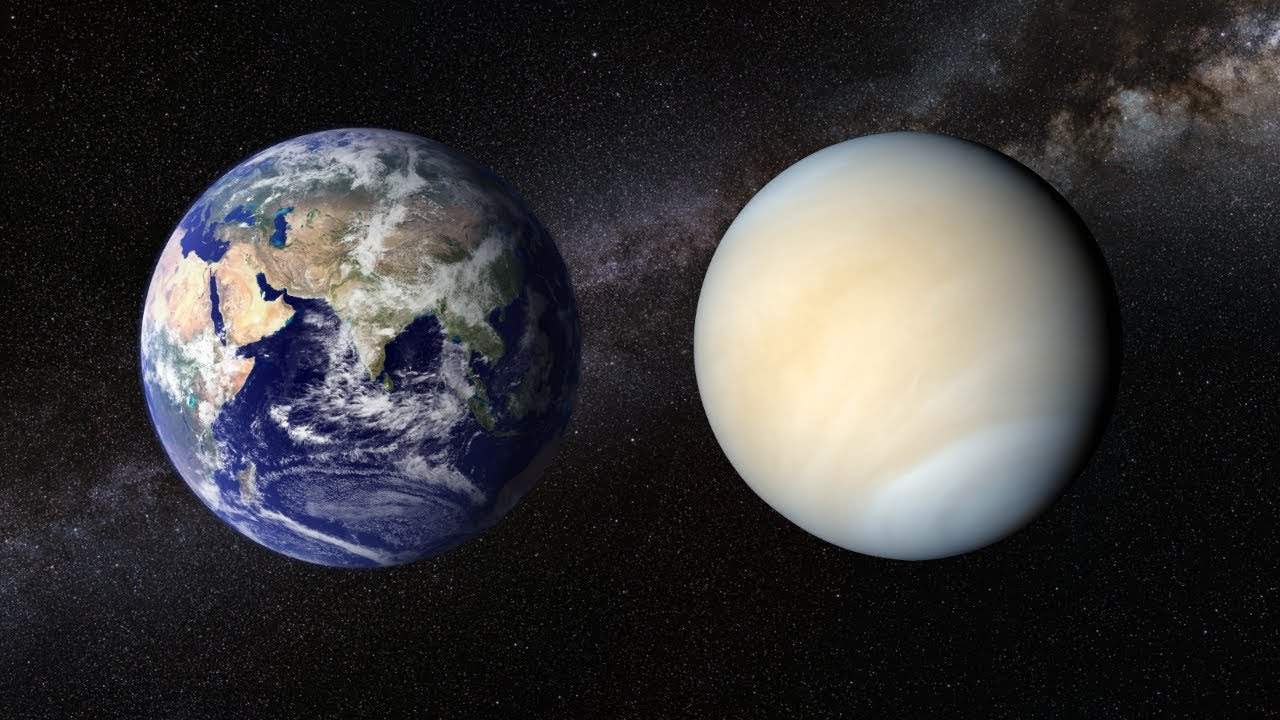
Venus, the hottest planet in our solar system, may have had a perfectly habitable environment for 2 to 3 billion years after the planet formed, according to a new study.
NASA’s Pioneer Venus spacecraft in 1978 found evidence that the planet may have once had shallow oceans on its surface. Several missions since then have investigated the planet’s surface and atmosphere, revealing new details on how it transitioned from an “Earth-like” planet to the hot, hellish place it is today. Researchers believes that Venus may have been a temperate planet hosting liquid water for 2 to 3 billion years before a massive resurfacing event about 700 million years ago triggered a runaway greenhouse effect, which caused the planet’s atmosphere to become incredibly dense and hot.
NASA’s Goddard Institute’s researcher’s conducted five simulations that show what Venus’s environment would be like based on different levels of water coverage. Of which all five of the simulations suggest Venus may have been able to maintain stable temperatures, ranging from a low of 68 degrees Fahrenheit (20 degrees Celsius) to a high of 122 degrees Fahrenheit (50 degrees Celsius), for about 3 billion years, according to a statement from the Euro planet Society.
The resurfacing event in Venus, however triggered a series of incidents that caused a release, or outgassing, of carbon dioxide stored in the rocks of the planet. And hence atmosphere of Venus became too dense and hot for life to survive.
The researchers also considered a scenario, for comparison in which planet’s topography was similar to Earth’s with an ocean 1,000 feet (310 m) deep, as well as a scenario where the entire surface of Venus was covered in a 500-foot-deep (158 m) ocean, according to the statement.
The atmosphere of Venus, by 715 million years ago would likely have been dominated by nitrogen with trace amounts of carbon dioxide and methane — much like Earth’s today. If a massive outgassing event hadn’t occurred, suggest these conditions could have remained stable up until present times.
Pic Source: youtube