






















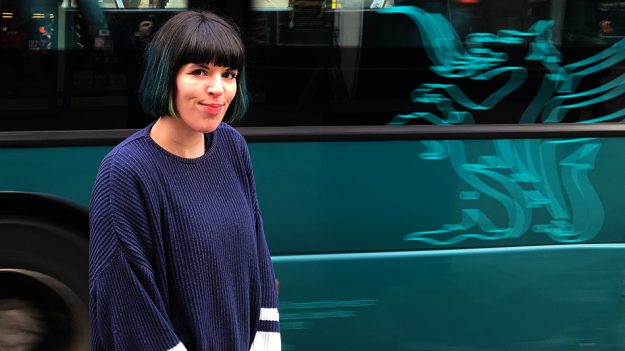
Since last year, women across UK have been able to buy eco-friendly menstrual products in supermarkets. Ella Daish explains how she helped achieve this step and why she is fighting to eliminate plastic from these day-to-day items.
Lat year, 26-year-old Ella Daish had one of the most unexpected conversations in her work as post-woman in Cardiff.
One morning Daish’s co-worker, a man in his fifties, showed up to tell her about the discussion that he had with his wife the night before. He couldn’t wait.
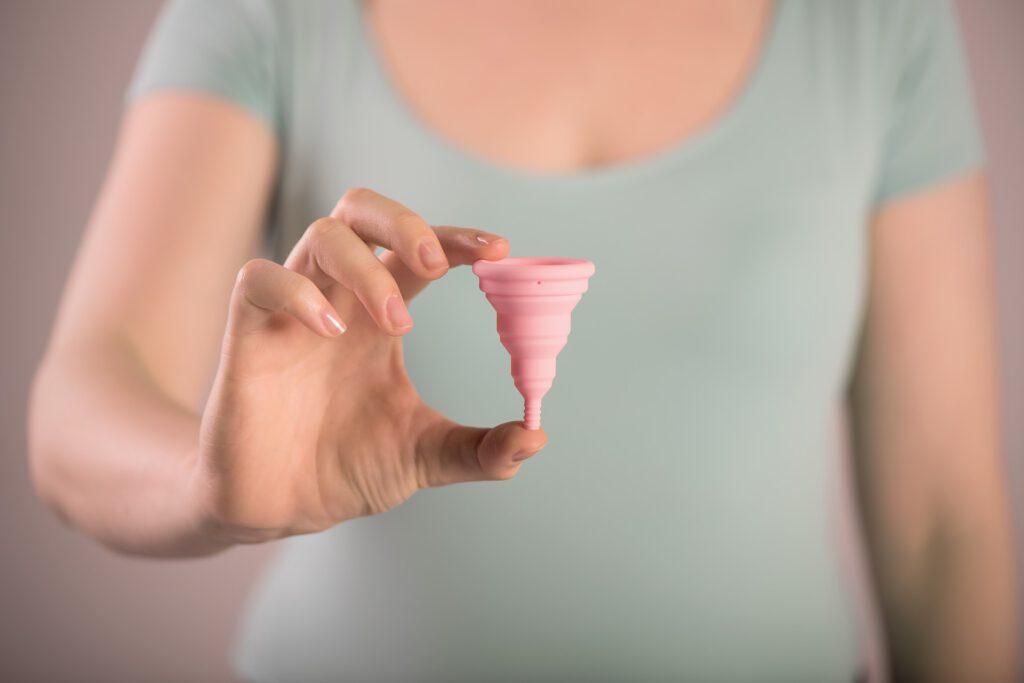
“They had a long discussion about period products and reusable products like pads and menstrual cups. He spoke so openly to me about this, which I never expected to happen. It was brilliant!” says Daish with a big smile in her face.
Daish’s co-worker knew that she is one of the loud voices campaigning against plastic. Last year, she started an online campaign to put an end to plastic in all menstrual period products, which already has 106,000 supporters worldwide.
Her goal is to reach 150,000 people so that she can knock on the door of big manufacturers in the UK, like Procter & Gamble, to demand they remove all the plastic content from their products like pads or tampons.
“My dream is all menstrual products and its packing become plastic free. That’s my ultimate goal,” says Daish.
During Daish’s job as a post–woman, she noticed the increasing number of bags with rubbish every week. To help, she decided to look how she could reduce and cut down her own plastic consumption.
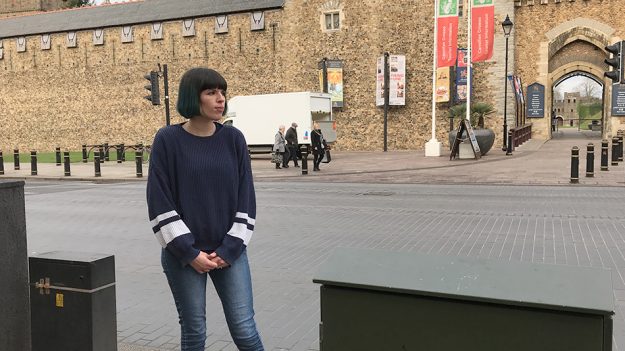
Ella Daish (26) in front of Cardiff Castle
Photo Courtesy- Francisco Rodriguez Irigoyen)
“I was really surprised how much plastic was in the products,” says Daish, pointing out the fact that this is something that is going to happen every month for the next 30 years.
A regular female period product can be very toxic for the environment. Sometimes they can be made from to 90% plastic. Plus, most of them end in the ocean.
“This not only affects the individuals that are using the products,” says Daish. “It affects other people too like people swimming in the ocean or walking alongside the beach. It is also affecting wildlife on the planet.”
According to the Marine Conservation Society, almost two billion of these items are flushed into the ocean every year in the UK.
But the biggest problem Daish says is the way that the plastic is being produced.
“The products have been designed in such a way that they have a short life span because you are going to be using it for seconds, minutes, or an hour.” she explains.
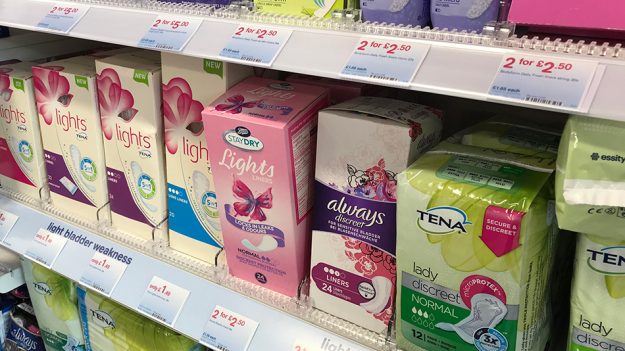
For example, Daish says that tampon applicators used to be made of cardboard. Now, most of them are made of plastic because it is cheaper for companies. These applicators are used for a few seconds and can take more than 500 years to breakdown.
That is why she is targeting big manufacturers and supermarkets to take responsibility for the plastic that they are selling or using in their products.
But the price of these products is still an issue. Usually, the consumer has to pay more for the eco-friendly options. This leaves fewer choices for women who cannot afford the eco-friendly option.
“It should be something that is cheaper to do because it is not having an impact the way the plastic is,” says Daish.
A woman uses an average of 11,000 disposable menstrual products in their reproductive lifetime according to the Women’s Environmental Network.
These facts led Daish to talk openly about this problem with her friends and family, “but no one really knew much.”
Written by: Swathi Subhash Nair,United Kingdom
            Intern- The World Women News