




















Business Manager- Bakeries & Food Services, value creation through innovation
An Enthusiastic working woman, mom’s Story …
I’m a sales and marketing professional with a food technology at core having spent 13 years in diverse industries that are in the food space or somewhere connected to food. Started career with quality and regulatory functionbut recent years have been in sales and marketing function. Value creation through innovation; ability to understand current and future market needs and positioning businesses to successfully expand footprint while creating unprecedented value for them have been key achievements.
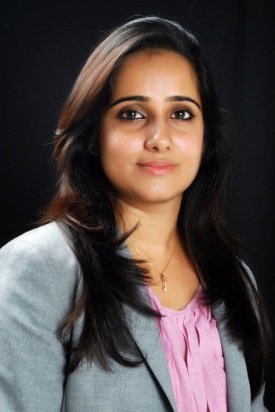
Mom to 8 year old daughter; consider myself an expert juggler between family and work. Artist by passion love to pursue it more professionally.
Dream Big, Work hard, Stay focused and surroundoneself with inspiring people is what I believe in.
- Studying diversified Mains like Biochemistry. Microbiology, even though differentother open areas were there for masters, why particularly you selected foodtechnology?
I majored in applied field of biology – biochemistry, microbiology and botany. My graduate studies left me with an interest in applying scienceto bring about changes in the areas of food, that’s when I decided to further pursue with a Masters in Food technology. I chose industry over academia because I felt that in industry I could make a larger impact in changing people’s diets by creating healthier food choices. Toward the end of my masters, I was in the right place at the right time—a position at Coca-Cola was solicited, I was campus recruited and began my career at Coca-Cola few months later.
- As a food technologist what is the current scenario in India, could you spare someconcerns regarding the quality of food that supplies in India?
I see consumers becoming more health conscious and expecting more from their food and beverage choices today. The food industry is rising to meet the consumers’ needs by offering healthier options and introducing more functional ingredients such as probiotics and fiber. But the overall quality of the offering has to grow leaps and bounds especially when we rely heavily on the chemical preservation of food and pesticides based agricultural techniques. There is a huge knowledge gap that exists to move to cleaner and safer methods of production. I see the future of food technology crossing paths with biotechnology to offer better quality and safer supplies in India.
- Excelled working in various top notch companies in India, what attracts you in thiscompany to stick on more years than others?
I currently lead the marketing function; responsible to deliver new products and define new strategies for the company for current and future growth. The excitement of developing innovative products interact with talented people in cross functional teams such as regulatory,manufacturing, product development, and legal energies me. I love the combination of science and creativity combining processing technology with food product development to create new and unique products.Being involved in innovation, I am constantly researching and watching for what consumers are looking for and what technologies we will need to make more convenient, nutritious foods available. It is a challenge but it is exciting at the same time.
- Showcasing the brand with incredible advertisements, people will fall in love withthe product without any doubt, comment on the assurance in quality of the productthat the company gives?
Companies need to responsibly sell products. However, the government cannot place general restrictions on food advertising due to companies’ rights to commercial speech. Nevertheless, food advertising is monitored and regulated in meaningful ways, and laws and legal mechanisms exist to protect consumers’ rights with respect to confusing, misleading, and false advertising of food products.
FSSAI in India is already working on guidelines to health and nutrition claims what can be made and what shouldn’t in lines with the global regulations of CODEX and US FDA.
Sometimes it’s true that healthy ads sell junk food. For example the term ‘Light’ or ‘Lite’ on a food label may also mean the food is light in fat, light in salt, light in color, or even light in taste. The characteristic which makes the food ‘light’ is usually not stated on the label. Accurate health claims are essential to building consumer trust. Most companies strive to substantiate their claims by sufficient scientific evidence and comply with all relevant legislation.
- The present pattern shows only the macronutrient content in food packets, theawareness of micronutrient to public is also mandatory, because it has more to dowith health, Can you comment on this?
Definitely micronutrient awareness is as important as the macronutrients, but we are trying to jump posts here. We haven’t even reached the milestone of people reading the food label before deciding to buy. Reading food labels and interpreting all the information on-pack can be a daunting task for a consumer. By knowing how to use it, one can understand how a specific food item can fit into their overall diet. Unfortunately India has a literacy rate of 74% that means 26% of the population still can’t read or write. Moreover I can safely say that most of this literate population too doesn’t attempt reading the food label. A research published in the British Food Journal on use of food labels by Indian consumers concluded that, “difficult terminology, small font size and inability to understand nutritional labels are the major problems encountered by the consumers”.
Some companies have already taken to task the need to educate the consumer on the goodness of nutrients in their food like the Nestlé’s ‘nutritional compass’, traffic light labelling, ‘Big 8’ on back of pack from Unilever. With a staff of doctorate-and master-level scientists and registered dietitians, the General Mills Bell Institute of Health and Nutrition (BIHN) collaborates on the development of quality products that contribute to healthy living.
- Challenges at you work?
The biggest challenge is combating food myths and pseudoscience. There is a lot of misinformation out there. The challenge is creating the right education for all of our stakeholders.
- The journey from Food technologist to Business manager, what were the lessons youlearned? And what are the take away advices from you to women entrepreneurs in oursociety to add in their career?
The journey hasn’t been all smooth and nice, there have instances that driven me crazy whilst those that pumped me up and groomed me not just professionally but personally. As you move from technical lead to more business lead the approach, knowledge and the speed of delivery varies. An eagerness to learn and a go getting attitude have made these transitions smoother and have come naturally to me.
My message to all women entrepreneurs is “Whatever you do; at whatever age youbegin; do right by as many people as possible that matter to you. When you do right by others, it literally comes back to you. And when you combine those opportunities with hard work, you’ll thrive at what you choose to do”.
- The taste of packet foods can enjoy only the average, above average, high creampeople in the society, what are the initiatives your company is taking to reach thestandard food products to ignored ones or to “labelled as poor ones”?
Usually, food products are sold on the health, indulgence or convenience platform. However, to sell to the Bottom of the Pyramid consumer on the nutrition plank converges the companies’ social responsibility (alleviating micronutrient deficiency, for instance) and business objectives.
Nestle, that markets a major brand of noodles, launched Masala Magic introduced at Rs2 with a fortified taste enhancer containing iron, iodine and vitamin for targeting micronutrient deficiency in the low-income families.
Numerous ventures in low-income areas operate at a village scale. Take ITC’s e-Choupal initiative, which provides rural Indian farmers with online market and agricultural data. Each internet kiosk serves farmers living within just a five-kilometer range. Or consider Danish multinational Grundfos’s clean-water-dispensing system. Each LifeLink serves just a single village.
Unilever has launched a number of products aimed at low strata of the society in urban and rural areas.
Although companies have tried to introduce products that tap the fortune at the bottom of pyramid the challenge to break even still remains hence such initiatives become mere part of the corporate social responsibility rather than mainstream business. Reoccupied with their social missions, companies have optimistically taken on challenging projects, only to be surprised when weak consumer demand and obstacles such as bad roads keep revenues low and costs high. Overstretched and disillusioned, many switch gears and reconstitute their ventures as break-even social investments that are destined to remain small.
- Due to the boom of technology innovations, more artificiality interfered in followingthe traditional foods and lifestyle, Are the food formulations reaching the societyprone to cause life style disease and cancer?
We are living in a real world where fresh cooked food travels a distance before it’s consumed. Convenient alternatives of traditional food are most often sought for due to lack of time to preparethem from scratch or for the need to consume them despite having lacked skills to make it.There is a tremendous opportunity for food manufacturers andretailers to lead a healthy movement by providing the products andservices that consumers want and need. As per Nielsen’s global study on health and wellness majority of the consumers are changing their diet by eating fewer fats, less sweeter and fresher foods. Companies around the globe have taken charge to improve by correcting their formulations to deliver convenient but nutritious food.
- Woman in Business is a non-accepted concept of our society, still could you share usthe extent of support from your family?
Women entrepreneurs or a woman in business is not a non- accepted concept anymore, although there are immense struggles over the path. Women who have positive relationships with and support from family tend to benefit from these resources in their business. Juggling work and child care becomes easy when there is family support and an understanding spouse would come a long way. There is a saying that “There’s always a Woman behind a man’s success”, and I would say there’s always “supportive family and friends behind a Woman’s success”. Women’s inclination to integrate work and family and to emphasize interconnectedness and relationships gives an advantage in capitalizing on sources of family-to-business enrichment and support.
- What are don’ts that a women entrepreneur to be careful in business?
There are few fears that a women entrepreneur might feel while approaching the idea of a startup.
Coping with fear of failure is one of them well you need a 100 ‘Nos’ before you can get a ‘yes’ but that’s alright, failures actually help you to rethink about the idea regroup your thoughts and approach it in a better way.
Gender empathyis another thing I feel cripples me.I have stopped worrying if people will treat me differently in business because of my gender rather I don’t feel the need. The bottom line is, if you’re successful, no one cares whether you are man or a woman.
Lastly don’t conform yourself to a man’s idea of what a leader should look like – competitive, aggressive and sometimes overly harsh, women are wired differently from men so their approach to businessis different. So be yourself, and have confidence in who you are. It’s ok to be emotional at times.
- As a technologist, would you like to continue in business? Or any future plans to bein Research?
I feel that we as food scientists have choices to be in the academia or work in the industry, although degree of individual’s contributions to development of the society and application of science doesn’t change. It depends on what would excite you more as a personal choice, for me the choice was clear that I wanted to apply my skills and knowledge in the industry hence the choice. Well, that not necessarily applies to all. Ultimately, the choice between academia and an industry involves many tradeoffs, and the best “fit” often depends on individual preferences and working style. I would like to continue in the industry but feel have lot more to contribute and feel arrived in life.
- Can you share the limitations in opportunities for microbiologists in India?
The scope in microbiology is immense as its involvement in many fields like medicine, pharmacy, food and beverage industry, clinical research, agriculture, chemical technology and nanotechnology is growing.
Saying that not many universities in India offer specialization in microbiology and we see most students head out of India for advanced studies. Well it could also be that the awareness among the students with regard to career prospects of this field within India is pretty low and hence least preferred.
There’ll always be a microbiological unit in a biotechnology or a food company and a department of microbiology in institutes or companies dealing with the aspects of microbiology, but Jobs needing a Microbiology graduate are few and probably have millions of applicants every year.
What India lacks today as compared to advanced countries is the popularization of microbiologists in the new age fields – such as environment control and monitoring, marine microbiology, genetics, petroleum and bio fermentation to name a few. This will surely bring new prospects and help alleviate the fear and dilemma of studentswho are constrained by the thought of being confined to a lab rather than the field.
Simply put we need to glamourize this field. Entrepreneurship in microbiology is the need of the hour – new diagnostic kits, drug discovery, alternatives for food chemicals to promote clean label and much more.
- Being a mother, a wife, a daughter, how u balance work and life as majority of thepeople fail to make it happen?
I should tell you that it isn’t easy for being a mother, wife, daughter at the same time also be successful at work. It takes a toll sometimes but over the years I’ve realized that it works better when you are not working on expectations set by others. If you set yourself a bar as high as possible and keep yourself motivated to stay abreast it, balance comes naturally.
- Who is the real motivator for you in your life?
Well in terms of people there are many that motivated me along the way. Life stories of some great influential people such as Nikola Tesla, Elon Musk, and Steve Jobs have inspiredme to cultivate a go getting attitude to achieve more. My daughter is a real motivator who keeps me on my toes every single day.
But sustained motivation is most of all self-driven. I tell people all the time that I’m “still hungry for more.” I find that by working with the same energy, the same commitment, and the same drive that I had few years back, the more success I find. Don’t kick the feet up and bask in triumph. Roll up the sleeves and keep pushing is my moto.
- Message to start up women entrepreneurs?
Share and learn from stronger entrepreneurial role models. Join some mentor circles available for women entrepreneurs. Accesses to such Mentorship Circles provides a structure for informal yet rich dialogue and learn fromexperiences of these successful entrepreneurs on how they dealt with barriers such as funding, changes in society perception, balancing personal and professional life and also creating a vibrant business ecosystem.Go out there and create your own definition of success.